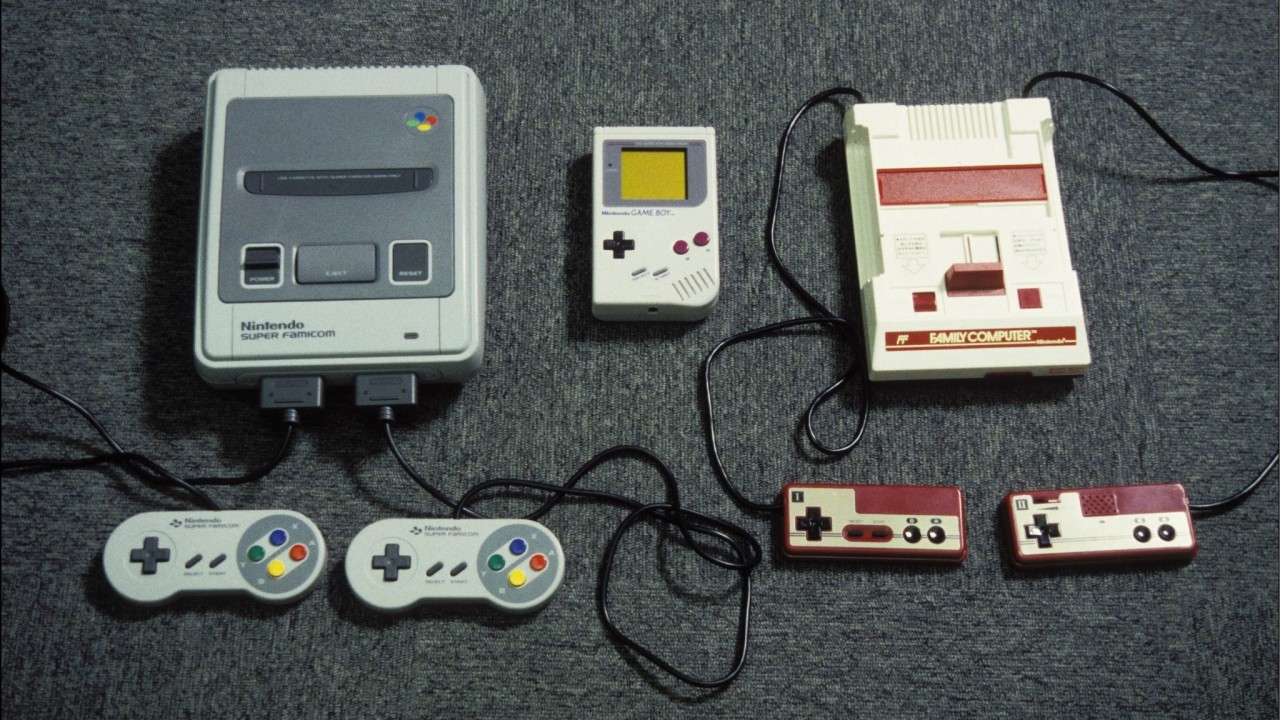
Video games are barely seventy years old. In the context of human cultural history — compared to painting, music, or even film — that's a remarkably short runway for a medium to develop its own language, its own genres, its own canon of classics. And yet, in those seven decades, games have traveled further than perhaps any other art form in human history, moving from single blinking dots on an oscilloscope screen to photorealistic worlds that millions of people inhabit simultaneously.
Understanding that journey isn't just an exercise in nostalgia. It explains why games look, feel, and behave the way they do today — why certain design conventions persist, why some genres have thrived while others faded, and what the constraints of each technological era forced creative teams to invent. The history of video games is, at its core, a history of creative problem-solving under radical constraint.
The Experimental Origins (1940s–1960s)
The earliest ancestors of modern video games weren't created for entertainment. They were created to test hardware. In 1947, Thomas T. Goldsmith Jr. and Estle Ray Mann filed a patent for a "Cathode Ray Tube Amusement Device" — a missile simulator that used an oscilloscope and physical overlays to create a rudimentary targeting experience. It was closer to a physics demonstration than a game, but the principle was there: electronic interaction, real-time feedback, and a player making decisions.
The watershed moment most historians agree on came in 1958, when Brookhaven National Laboratory physicist William Higinbotham created "Tennis for Two" as an interactive exhibit for visitors. Using an analog computer and an oscilloscope, it displayed a side-view tennis court and allowed two players to hit a ball back and forth. It was not particularly sophisticated by any standard, but visitors reportedly queued for hours to play it. Something fundamental had been discovered about human nature: given an interactive electronic display, people would engage with it almost compulsively.
"The early developers weren't thinking about games as an industry or even as entertainment. They were solving puzzles. The player's enjoyment was often a fortunate accident of good engineering."
The 1960s saw this experimentation move into university computer labs, largely inaccessible to the general public. MIT students created "Spacewar!" in 1962, running it on a PDP-1 computer the size of a small car. Two ships orbited a gravitational star, firing torpedoes at each other. It was genuinely competitive, technically impressive, and fun — and it spread through the academic computer network, becoming the first widely distributed video game. The template it established (two players, competitive action, physics-driven movement) would recur throughout gaming history.
The Arcade Era and Home Revolution (1970s–1980s)
The 1970s transformed video games from a laboratory curiosity into a commercial phenomenon. Atari's "Pong" (1972) wasn't the first arcade game, but it was the first to achieve mass market success. Simple to understand but difficult to master, it found an audience in bars and arcades before becoming one of the first home console games. The message to the industry was clear: people would pay, repeatedly, for the privilege of playing.
The golden age of arcades followed throughout the late 1970s and early 1980s. Space Invaders (1978), Asteroids (1979), Pac-Man (1980), Donkey Kong (1981) — each title added something new to the vocabulary of interactive design. Space Invaders introduced the concept of increasing difficulty and high scores that persisted. Pac-Man introduced maze navigation, power-ups, and distinct enemy behaviors. Donkey Kong gave us a hero character with a goal and obstacles — the rudiments of a narrative arc.
The Atari 2600, released in 1977, brought these experiences home. Suddenly, parents who had watched their children pump quarters into arcade machines could purchase a single device that delivered dozens of games directly to their television. The model was transformative — and the software library that grew around it established many conventions that game developers still follow today, including the concept of licensed tie-ins, the value of exclusive titles, and the importance of a diverse genre range.
The North American video game crash of 1983 is often treated as a disaster, but it was in many ways a necessary correction. An oversaturated market filled with low-quality titles had trained consumers to distrust new releases. The recovery, led by Nintendo's NES in 1985 (1983 in Japan), was built on a quality assurance system, strong first-party titles, and a genuine understanding of what players actually wanted from the experience. Super Mario Bros., bundled with the NES, didn't just sell hardware — it redefined what a video game could be.
The Console Wars and 3D Revolution (1990s)
Few decades in gaming history match the 1990s for sheer velocity of change. The Super NES versus Sega Genesis rivalry drove rapid hardware innovation while producing some of the most beloved titles in gaming history. Both companies understood that exclusive software was the deciding factor — consoles were delivery vehicles for experiences you could not get elsewhere.
The true revolution, however, arrived with the transition to 3D graphics. Sony's PlayStation (1994 in Japan) and Nintendo 64 (1996) didn't just offer better-looking games — they fundamentally altered what kinds of games were possible. Camera control, spatial exploration, three-dimensional puzzle solving, and movement through environments that felt genuinely physical rather than representational: all of these became available within a few years. Games like Super Mario 64, The Legend of Zelda: Ocarina of Time, and the original Tomb Raider weren't just impressive technical achievements — they were blueprints that developers still reference today.
The PC gaming scene during this period ran a parallel track, developing in slightly different directions. Real-time strategy games, first-person shooters, and early massively multiplayer online games flourished on hardware that could be upgraded incrementally. Id Software's Doom (1993) and Quake (1996) created the FPS template. Blizzard's Warcraft and StarCraft established competitive RTS as a serious genre. These weren't just games — they were the foundations of entire communities and competitive scenes that persist to the present day.
Online Connectivity and the Expansion Era (2000s)
Internet connectivity changed everything. The Xbox Live launch in 2002 and the gradual normalization of online play across PlayStation and PC platforms didn't just add a new feature to games — they transformed games into ongoing social experiences. A single-player game could now be supplemented with competitive multiplayer. An MMO could sustain a living, evolving world for years. Players didn't just play games; they inhabited them, built communities around them, and developed identities connected to them.
World of Warcraft, launched in 2004, became the defining example of this shift. At its peak, over twelve million subscribers were paying monthly fees to inhabit its world — working, socializing, competing, and collaborating in ways that had never been possible in any previous medium. The concept of a persistent online world where your actions had consequences that other players could witness became a new dimension of the gaming experience.
Handhelds and mobile gaming also matured significantly during this period. Nintendo's DS and Sony's PSP established that there was an enormous audience for dedicated portable gaming hardware, while the eventual emergence of smartphones created an entirely new distribution model that bypassed traditional retail entirely.
The Modern Era: Streaming, Indie, and Beyond (2010s–Present)
Contemporary gaming is defined by its contradictions. Blockbuster productions with budgets exceeding major Hollywood films exist alongside independent titles made by one or two developers that reach millions of players. Cloud streaming threatens to decouple games from hardware entirely, while at the same time, physical collectors' editions remain a lucrative market. Virtual reality has arrived — for the third time, by some counts — and this time appears to be finding a stable, if modest, foothold.
Perhaps the most significant shift of the past decade has been in who plays games. The demographics of gaming have broadened dramatically — by most reliable surveys, women now represent close to half of all gamers, and the average age of players has risen steadily as the first generation to grow up with games carries those habits into middle age. Games are no longer the exclusive domain of a specific demographic. They are a mainstream cultural medium, and they are beginning to be treated as such — by film studios, by academics, by museums, and by audiences who consume gaming content (streaming, video essays, reviews) without necessarily playing games themselves.
The future of video games is genuinely unpredictable in ways that earlier eras weren't. The technological trajectory — from pong to open world — was always clearly upward in resolution, complexity, and scale. The next phase seems less about raw graphical fidelity (which is approaching practical limits of human perception) and more about depth of simulation, accessibility of creation, and breadth of participation. What's certain is that the medium that began with a blinking dot on an oscilloscope in 1947 is nowhere near done evolving.
Why This History Matters
Knowing gaming history makes you a better player and a sharper critic. When you understand why the first-person shooter looks the way it does, you can recognize when a modern game is respecting those conventions thoughtfully versus ignoring them sloppily. When you know that certain design patterns — lives, checkpoints, experience bars, loot drops — emerged from specific technical or economic constraints, you can ask whether they still serve the player or whether they've simply persisted through habit.
The history of video games is the history of a medium learning how to speak. It's still learning. The most interesting chapters may be ahead of us.